
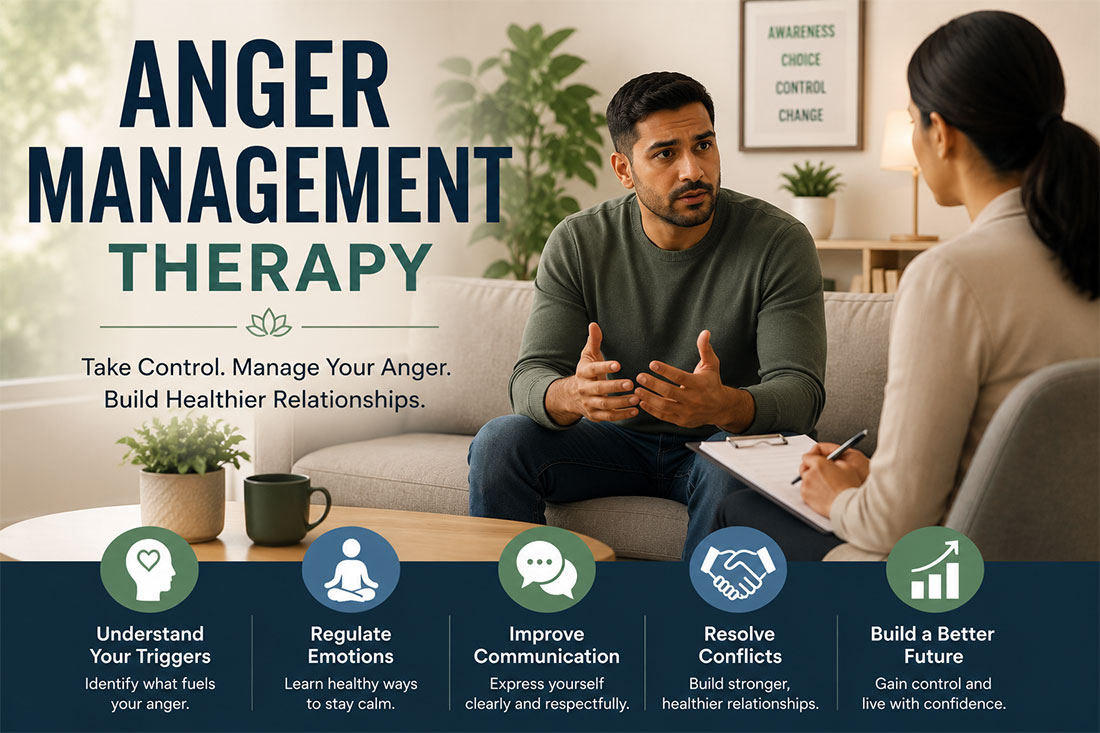
Anger management therapy helps individuals deal with bouts of anger, which is a normal human emotion, but when it begins affecting your relationships, work, health, or quality of life, anger management therapy can help. Therapy teaches healthier ways to understand triggers, regulate emotions, communicate effectively, and respond rather than react.
Whether your anger shows up as yelling, frustration, resentment, or emotional withdrawal, seeking support is a sign of strength—not weakness.
What Is Anger Management Therapy?
Anger management therapy helps people recognize the causes of their anger and develop healthier ways to manage it. Rather than trying to eliminate anger altogether, therapy focuses on understanding why anger occurs and how to respond in more productive ways.
A therapist works with you to identify emotional triggers, recognize patterns of thinking, improve communication skills, and develop coping strategies that reduce emotional escalation.
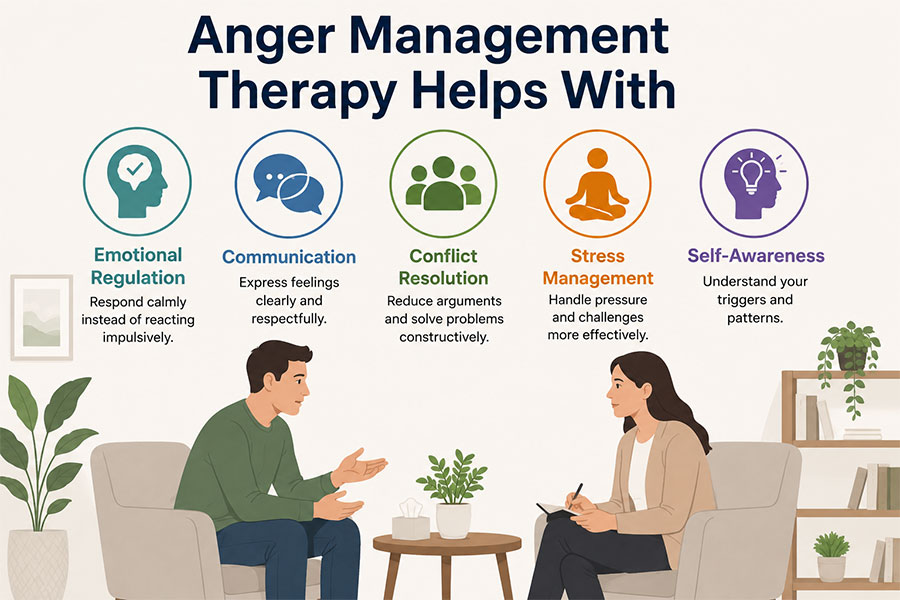
| Anger Management Therapy Helps With | Goal |
| Emotional regulation | Respond calmly instead of reacting impulsively |
| Communication | Express feelings respectfully |
| Conflict resolution | Reduce arguments and misunderstandings |
| Stress management | Handle pressure more effectively |
| Self-awareness | Understand personal anger triggers |
Signs It May Be Time to Seek Anger Management Therapy
Many people wondering and ask ‘Do I need anger management therapy?’. Well, everyone loses their temper occasionally. The difference is whether anger has become a recurring pattern that negatively affects daily life.
You may benefit from therapy if you:
✓ Frequently lose your temper
✓ Yell during disagreements
✓ Feel guilty after arguments
✓ Become easily irritated over small issues
✓ Hold onto resentment for long periods
✓ Damage relationships because of anger
✓ Experience physical symptoms such as tension or headaches
✓ Feel your anger is becoming difficult to control
The earlier these patterns are addressed, the easier they are often to change.
Common Signs and Their Impact
| Sign | Possible Impact |
| Frequent arguments | Relationship stress |
| Road rage | Safety concerns |
| Workplace conflicts | Career challenges |
| Emotional outbursts | Family tension |
| Bottled-up anger | Anxiety, stress, depression |
| Passive aggression | Communication breakdowns |
Anger Doesn’t Always Look Like Anger
Many people imagine anger as shouting or aggressive behaviour, but it often appears in quieter ways.
Some people express anger by:
- Becoming sarcastic
- Withdrawing emotionally
- Giving the silent treatment
- Holding grudges
- Becoming overly critical
- Feeling constantly irritated
- Avoiding difficult conversations
Therapy helps identify these less obvious patterns and replace them with healthier responses.
What Causes Anger?
Anger itself is rarely the root problem.
Often it develops from underlying emotions or situations such as:
✓ Chronic stress
✓ Anxiety
✓ Depression
✓ Relationship difficulties
✓ Childhood experiences
✓ Trauma
✓ Work pressure
✓ Financial concerns
✓ Feeling misunderstood or unheard
Understanding these underlying causes is one of the most valuable parts of therapy.
What Happens During Anger Management Therapy?
Therapy is collaborative and personalized to your experiences.
A typical process may include:
- Understanding your history and current challenges.
- Identifying emotional triggers.
- Recognizing thinking patterns that increase anger.
- Learning calming and emotional regulation techniques.
- Practising healthier communication skills.
- Developing strategies for future situations.
The goal is not to suppress emotions but to respond to them in healthier, more constructive ways.
Benefits of Anger Management Therapy
People who participate in anger management therapy often experience improvements across many areas of life.
| Benefit | How It Helps |
| Better emotional control | Fewer impulsive reactions |
| Healthier relationships | Improved communication and trust |
| Reduced stress | Better emotional wellbeing |
| Increased confidence | Greater sense of control |
| Improved workplace interactions | Better teamwork and professionalism |
| Stronger decision-making | Less emotionally driven reactions |
Common Myths About Anger Therapy
Myth: Therapy is only for people with serious anger problems.
Reality: Many people seek therapy simply to improve communication and emotional regulation before problems become severe.
Myth: Anger means you’re a bad person.
Reality: Anger is a normal emotion. Learning how to manage it is what matters.
Myth: Therapy teaches you not to feel angry.
Reality: Healthy therapy teaches you how to express anger appropriately—not eliminate it.
Myth: I should be able to fix this myself.
Reality: Many people benefit from professional guidance that provides practical tools and objective support.
How Anger Affects Physical Health
Long-term unmanaged anger can contribute to ongoing stress throughout the body.
Potential effects may include:
- Increased muscle tension
- Sleep difficulties
- Frequent headaches
- Elevated stress levels
- Fatigue
- Difficulty concentrating
Learning healthier coping strategies may improve both emotional and physical wellbeing over time.
When Should You Seek Help?
Consider speaking with a therapist if your anger:
✓ Happens more frequently than you’d like
✓ Causes regret afterwards
✓ Is damaging important relationships
✓ Creates problems at work
✓ Feels increasingly difficult to manage
✓ Leaves you emotionally exhausted
You don’t need to wait until anger causes a crisis before seeking support.
Why Choose Life Changes Therapy?
At Life Changes Therapy, we understand that anger is often connected to deeper emotions, life experiences, and ongoing stress. Our supportive, non-judgmental approach focuses on helping clients understand their emotional patterns while developing healthier ways to communicate, manage conflict, and build stronger relationships.
Every treatment plan is personalized to each individual’s goals, circumstances, and life experiences.
Final Thoughts
Seeking anger management therapy isn’t about admitting failure—it’s about choosing healthier relationships, better communication, and greater emotional control.
Whether your anger appears as frustration, irritability, emotional withdrawal, or explosive reactions, therapy can provide practical strategies that help you respond with greater confidence and calm.
The sooner unhealthy patterns are addressed, the sooner positive changes can begin.
Frequently Asked Questions
Can anger management therapy really help?
Yes. Many people develop healthier communication skills, improve emotional regulation, reduce conflict, and strengthen relationships through therapy.
Is anger management therapy only for people who become physically aggressive?
No. Therapy can help anyone who struggles with frustration, irritability, resentment, verbal conflict, or emotional regulation.
How many anger management therapy sessions will I need?
The number of sessions depends on your goals, personal circumstances, and the challenges you’re experiencing. Your therapist will develop a plan that meets your individual needs.
What techniques are used during anger management therapy?
Therapy may include emotional awareness, cognitive behavioural strategies, stress management techniques, communication skills, relaxation exercises, and conflict-resolution strategies.
Does Life Changes Therapy provide anger management therapy in Mississauga?
Yes. Life Changes Therapy provides professional anger management therapy to help individuals better understand their emotions, improve communication, and develop healthier ways of managing anger.