Many people assume anger management therapy is only for individuals with severe anger problems or explosive outbursts. In reality, anger exists on a spectrum, and even mild to moderate anger issues can negatively impact relationships, work performance, mental health, and overall quality of life.
One of the most common questions people ask is: “How do I know if I need anger management therapy?”
The answer often comes down to whether anger is beginning to interfere with your relationships, decision-making, emotional well-being, or daily functioning.
If you’ve been wondering whether your frustration, irritability, or emotional reactions have become difficult to manage, this guide can help you identify common warning signs and understand how anger management therapy can help.
Quick Answer
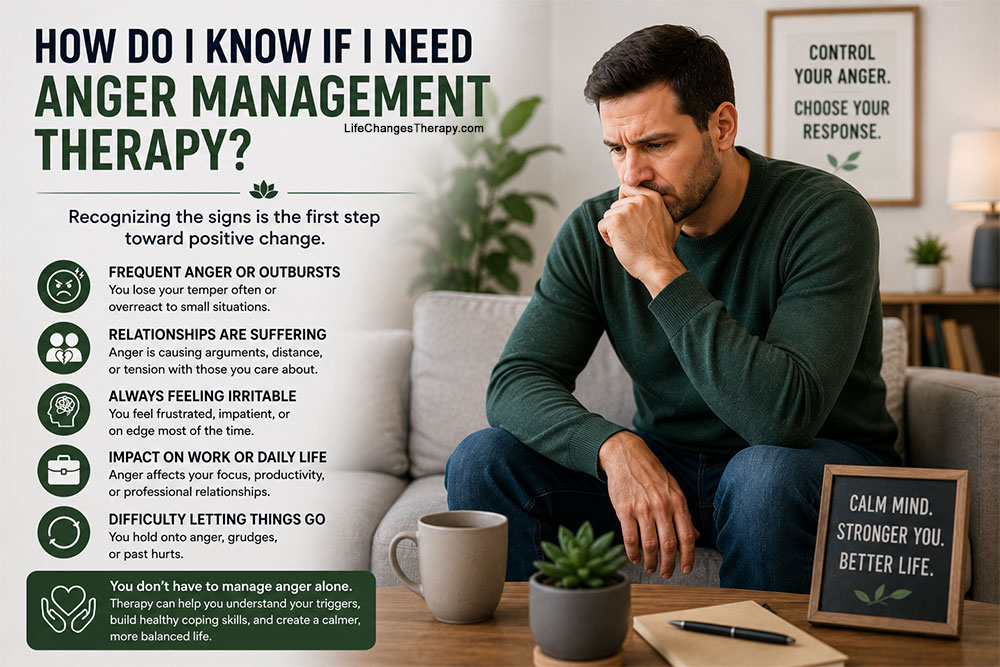
You may benefit from anger management therapy if anger is affecting your relationships, work, family life, emotional well-being, or ability to respond calmly to everyday situations.
Seeking support early can help prevent ongoing conflict and improve emotional control.
What Is Anger?
Anger is a normal human emotion.
In healthy situations, anger can help us recognize when boundaries have been crossed or when something feels unfair.
The problem is not anger itself.
The problem occurs when anger becomes difficult to control, happens too frequently, lasts too long, or causes harm to yourself or others.
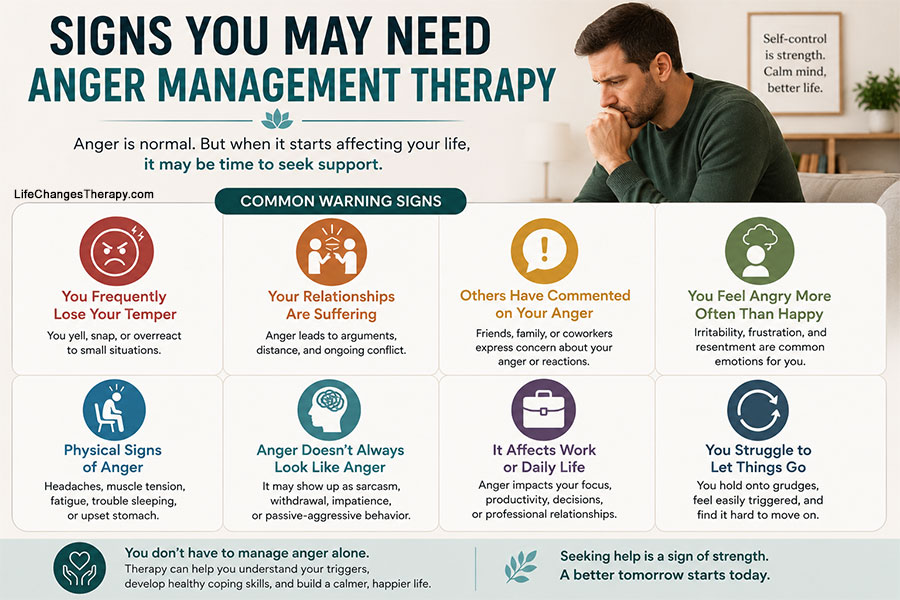
Signs You May Need Anger Management Therapy
You Frequently Lose Your Temper
Everyone gets frustrated occasionally.
However, if you find yourself regularly yelling, arguing, snapping at others, or having emotional outbursts, it may be a sign that additional support could be helpful.
Common examples include:
✗ Raising your voice frequently
✗ Overreacting to small frustrations
✗ Becoming angry quickly
✗ Struggling to calm down after conflict
When anger becomes your default response, therapy can help you understand why.
Your Relationships Are Suffering
One of the clearest signs that anger management therapy may be beneficial is when anger starts affecting relationships.
You may notice:
✗ Frequent arguments
✗ Increased tension at home
✗ Strained friendships
✗ Communication breakdowns
✗ Difficulty maintaining healthy relationships
Healthy relationships require emotional regulation, communication, and empathy.
People Have Commented on Your Anger
Sometimes others notice changes before we do.
If family members, friends, coworkers, or a partner have expressed concern about your anger, it may be worth taking those concerns seriously.
Comments such as:
- “You seem angry all the time.”
- “You overreact to everything.”
- “I never know how you’re going to respond.”
may indicate a pattern that deserves attention.
Anger Doesn’t Always Look Like Anger
Many people imagine anger as yelling or aggression.
However, anger can appear in less obvious ways.
Some signs include:
✓ Irritability
✓ Sarcasm
✓ Passive-aggressive behaviour
✓ Emotional withdrawal
✓ Resentment
✓ Constant frustration
✓ Impatience
✓ Difficulty letting things go
In some cases, anger is expressed inwardly rather than outwardly.
You Feel Angry More Often Than Happy
Everyone experiences occasional frustration.
However, if anger feels like one of your dominant emotions, it may be time to seek support.
Ask yourself:
- Do I feel irritated most days?
- Am I constantly frustrated?
- Do minor inconveniences trigger strong reactions?
- Do I feel emotionally exhausted from being angry?
If the answer is yes, therapy may help identify the underlying causes.
Physical Signs of Anger Problems
Anger affects both the mind and body.
Physical symptoms can include:
✓ Muscle tension
✓ Headaches
✓ Increased heart rate
✓ Jaw clenching
✓ Difficulty sleeping
✓ Fatigue
✓ Digestive issues
Chronic anger can place significant stress on the nervous system over time.
Common Causes of Anger Issues
Anger itself is often not the root problem.
It is frequently a response to deeper emotions or unresolved experiences.
Common contributors include:
| Underlying Factor | Examples |
| Stress | Work pressure, financial concerns |
| Anxiety | Constant worry and tension |
| Depression | Irritability and emotional frustration |
| Trauma | Unresolved emotional wounds |
| Relationship Problems | Communication difficulties |
| Low Self-Esteem | Sensitivity to criticism |
| Burnout | Emotional exhaustion |
Understanding these underlying factors is often a major focus of therapy.
Common Myths About Anger Management Therapy
Myth #1: Therapy Is Only for Violent People
✗ Reality: Most clients seeking anger management therapy are not violent.
They simply want healthier ways to manage emotions.
Myth #2: Anger Means You’re a Bad Person
✗ Reality: Anger is a normal emotion.
The goal is learning how to respond to it effectively.
Myth #3: You Should Be Able to Control It Yourself
✗ Reality: Emotional regulation is a skill that many people benefit from learning and practicing with professional support.
Myth #4: Therapy Will Make Me Stop Feeling Angry
✗ Reality: Therapy helps you respond differently to anger, not eliminate the emotion entirely.
What Happens During Anger Management Therapy?
Anger management therapy focuses on helping individuals understand and manage emotional reactions more effectively.
Sessions often include:
✓ Identifying anger triggers
✓ Understanding emotional patterns
✓ Developing coping strategies
✓ Improving communication skills
✓ Practicing emotional regulation
✓ Learning stress-management techniques
✓ Building self-awareness
The goal is to create healthier responses to challenging situations.
Benefits of Anger Management Therapy
Many clients experience significant improvements after therapy.
Benefits may include:
✓ Better emotional control
✓ Improved relationships
✓ Reduced conflict
✓ Healthier communication
✓ Lower stress levels
✓ Increased self-awareness
✓ Better decision-making
✓ Improved confidence
The skills learned often benefit every area of life.
Why More People Are Seeking Anger Management Therapy
Today, more individuals recognize that emotional wellness is just as important as physical health.
People increasingly seek therapy to:
✓ Improve relationships
✓ Reduce stress
✓ Strengthen emotional intelligence
✓ Improve workplace interactions
✓ Develop healthier coping skills
Seeking support has become a proactive step rather than a last resort.
Why Choose Life Changes Therapy?
Life Changes Therapy provides professional anger management therapy in Mississauga for individuals struggling with frustration, irritability, emotional regulation, relationship conflict, and stress.
Clients appreciate their:
✓ Compassionate approach
✓ Practical coping strategies
✓ Personalized treatment plans
✓ Supportive environment
✓ Focus on long-term emotional wellness
Sonia Panchyshyn M.S.W., B.S.W., R.S.W. works closely with clients to help them better understand their emotions, improve self-awareness, and develop healthier ways of managing anger and stress.
Final Thoughts
How do you know if you need to speak with an anger management therapist?
If anger is affecting your relationships, work, family life, emotional well-being, or ability to enjoy everyday experiences, it may be time to seek support.
Anger management therapy is not about suppressing emotions. It is about learning how to respond to those emotions in healthier, more constructive ways.
For many people, therapy provides the tools needed to create stronger relationships, reduce stress, and improve overall quality of life.
FAQ
How do I know if I need anger management therapy?
You may benefit from therapy if anger is causing relationship problems, frequent conflict, emotional distress, or difficulty managing everyday frustrations.
Is anger management therapy only for severe anger issues?
No. Many people seek therapy for mild or moderate anger concerns before they become more significant.
What causes anger problems?
Common causes include stress, anxiety, depression, trauma, relationship difficulties, burnout, and unresolved emotional experiences.
How long does anger management therapy take?
The length of therapy varies depending on individual goals, challenges, and progress.
Does Life Changes Therapy offer anger management therapy in Mississauga?
Yes. Life Changes Therapy provides anger management therapy services designed to help individuals improve emotional regulation, reduce conflict, and develop healthier coping skills.