
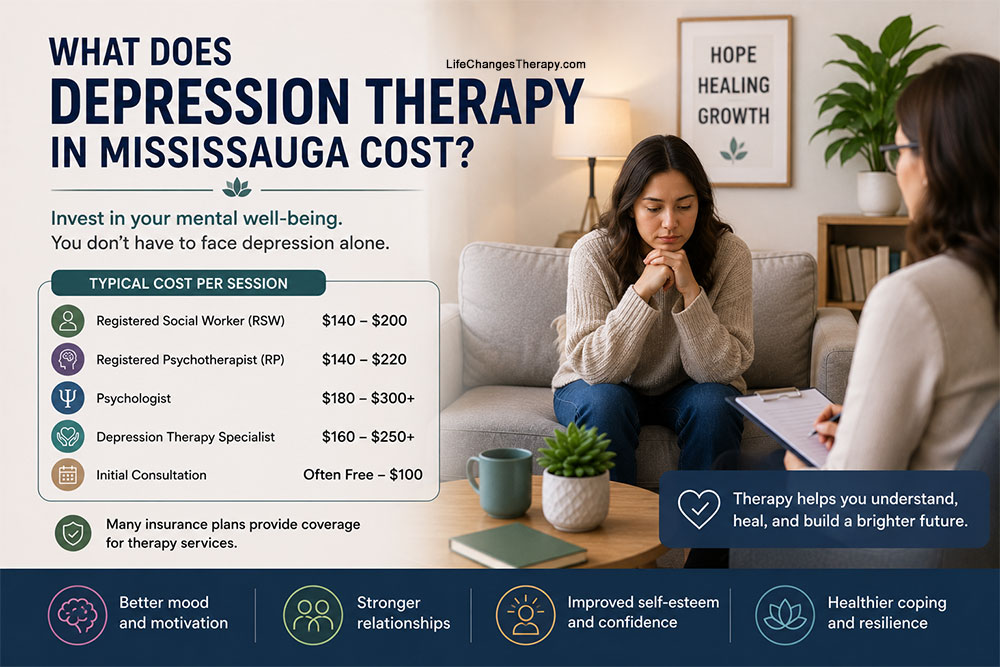
One of the most common questions people ask before reaching out for support is: What does depression therapy in Mississauga cost?
Whether you’re experiencing persistent sadness, emotional numbness, low motivation, fatigue, hopelessness, or difficulty enjoying daily life, understanding the cost of depression therapy can help you make an informed decision about your mental health.
Many people delay seeking help because they are uncertain about therapy costs. However, depression therapy is often more accessible than people expect, and many insurance plans provide coverage that can significantly reduce out-of-pocket expenses.
If you’re considering depression therapy in Mississauga, this guide explains typical costs, factors that influence pricing, insurance coverage, and what you can expect from the therapeutic process.
Quick Answer
Depression therapy in Mississauga typically costs between $140 and $220 per session, depending on the therapist’s credentials, experience, specialization, and session length.
Many extended health benefit plans provide coverage for services offered by Registered Social Workers (RSWs), Registered Psychotherapists (RPs), and Psychologists.
Depression Therapy Cost Overview
| Service Type | Typical Cost |
| Registered Social Worker (RSW) | $140 – $200 |
| Registered Psychotherapist (RP) | $140 – $220 |
| Psychologist | $180 – $300+ |
| Depression Therapy Specialist | $160 – $250+ |
| Initial Consultation | Often Free – $100 |
Most therapy sessions are approximately 50 to 60 minutes long.
Why People Seek Depression Therapy
Depression affects much more than mood.
It can influence relationships, work performance, physical health, motivation, and overall quality of life.
Common reasons people seek depression therapy include:
✓ Persistent sadness
✓ Emotional numbness
✓ Loss of interest in activities
✓ Fatigue and low energy
✓ Feelings of hopelessness
✓ Difficulty concentrating
✓ Social withdrawal
✓ Reduced motivation
✓ Sleep disturbances
Depression therapy helps individuals better understand these experiences and develop healthier ways of coping.
What Does Depression Therapy Help With?
Many people wonder what actually happens during therapy and whether it is worth the investment.
Depression therapy often helps individuals:
✓ Understand contributing factors
✓ Develop healthier thought patterns
✓ Improve emotional regulation
✓ Increase motivation
✓ Rebuild confidence
✓ Strengthen coping skills
✓ Improve relationships
✓ Create healthier routines
The goal is not simply symptom management.
The goal is long-term emotional wellness and improved quality of life.
The Hidden Cost of Untreated Depression
When considering what depression therapy costs, it is important to also consider the impact of leaving depression untreated.
Depression can contribute to:
✗ Reduced workplace productivity
✗ Relationship difficulties
✗ Emotional exhaustion
✗ Sleep problems
✗ Social isolation
✗ Increased anxiety
✗ Physical health concerns
✗ Lower overall life satisfaction
Many individuals find that therapy becomes one of the most valuable investments they make in their well-being.
What Factors Affect Depression Therapy Cost?
Several factors influence therapy pricing.
Therapist Credentials
The professional designation of the therapist often impacts cost.
Examples include:
- Registered Social Workers (RSWs)
- Registered Psychotherapists (RPs)
- Psychologists
Different levels of education, training, and specialization may result in different fee structures.
Experience and Specialization
Therapists who focus specifically on depression treatment may charge higher rates because of their expertise and specialized training.
Session Length
Most appointments last approximately one hour.
Some therapists also offer:
- 30-minute sessions
- 60-minute sessions
- 90-minute intensive sessions
Longer sessions typically cost more.
Virtual vs In-Person Therapy
Many clients choose virtual therapy because it offers:
✓ Greater convenience
✓ Flexible scheduling
✓ Easier access
✓ No commute
Virtual and in-person sessions are often similarly priced.
Is Depression Therapy Covered by Insurance?
In many cases, yes.
Most extended health benefit plans provide some level of mental health coverage.
Coverage often includes:
✓ Registered Social Workers
✓ Registered Psychotherapists
✓ Psychologists
Before beginning therapy, consider asking your insurance provider:
- Is depression therapy covered?
- Which therapist credentials qualify?
- What are my annual coverage limits?
- Is a referral required?
Many clients are surprised to learn how much of their therapy costs may be reimbursed.
How Many Depression Therapy Sessions Will I Need?
This is one of the most common questions people ask.
The answer varies depending on:
- Symptom severity
- Personal goals
- Length of time symptoms have been present
- Life circumstances
- Participation in the therapeutic process
Some people notice meaningful improvements within 6 to 12 sessions.
Others choose ongoing support to continue building resilience and emotional well-being.
Every person’s journey is unique.
What Happens During Depression Therapy?
Depression therapy provides a safe, supportive, and non-judgmental space to explore emotional experiences.
Sessions may focus on:
✓ Understanding thoughts and emotions
✓ Identifying unhelpful patterns
✓ Exploring contributing life factors
✓ Building healthier coping skills
✓ Improving self-esteem
✓ Strengthening emotional resilience
✓ Creating practical goals
Therapy is tailored to each individual’s specific needs and circumstances.
Signs Depression Therapy May Be Worth the Investment
You may benefit from therapy if:
✓ Low mood persists for several weeks
✓ Motivation has significantly decreased
✓ You feel emotionally disconnected
✓ Relationships are suffering
✓ You no longer enjoy activities you once loved
✓ Daily responsibilities feel overwhelming
✓ Feelings of hopelessness continue to grow
✓ You feel stuck and unsure how to move forward
Seeking support early often leads to better outcomes.
Why More People Are Seeking Depression Therapy
Mental health awareness continues to grow.
Today, more people seek therapy for:
✓ Emotional wellness
✓ Personal growth
✓ Stress management
✓ Life transitions
✓ Relationship improvement
✓ Self-awareness
✓ Long-term resilience
Therapy is increasingly viewed as a proactive investment in overall health rather than a last resort.
Why Choose Life Changes Therapy?
Life Changes Therapy provides professional depression therapy in Mississauga for individuals experiencing sadness, emotional overwhelm, low motivation, anxiety, stress, and life challenges.
Clients appreciate their:
✓ Compassionate approach
✓ Personalized treatment plans
✓ Practical coping strategies
✓ Supportive environment
✓ Focus on long-term emotional wellness
Sonia Panchyshyn M.S.W., B.S.W., R.S.W. works closely with clients to help them understand their emotional experiences, develop healthier coping tools, and move toward greater confidence, resilience, and well-being.
Final Thoughts
What does depression therapy in Mississauga cost?
For most individuals, therapy sessions typically range between $140 and $220 per session, with many insurance plans helping offset those costs.
While therapy requires an investment, the benefits often extend far beyond symptom relief. Improved emotional well-being, healthier relationships, increased resilience, and a greater sense of hope can positively impact every aspect of life.
For many people, Mississauga depression therapy becomes one of the most valuable investments they make in themselves.
FAQ
What does depression therapy in Mississauga cost?
Most depression therapy sessions in Mississauga range from approximately $140 to $220 per session depending on the therapist’s credentials and experience.
Is depression therapy covered by insurance?
Many extended health plans provide coverage for Registered Social Workers, Registered Psychotherapists, and Psychologists.
How many depression therapy sessions will I need?
Many individuals begin noticing improvements within 6 to 12 sessions, although treatment length varies based on individual circumstances and goals.
Is online depression therapy effective?
Yes. Virtual therapy is highly effective for many individuals and offers additional convenience and flexibility.
Is depression therapy worth the cost?
Many clients report improvements in emotional well-being, confidence, coping skills, relationships, and overall quality of life after participating in therapy.