
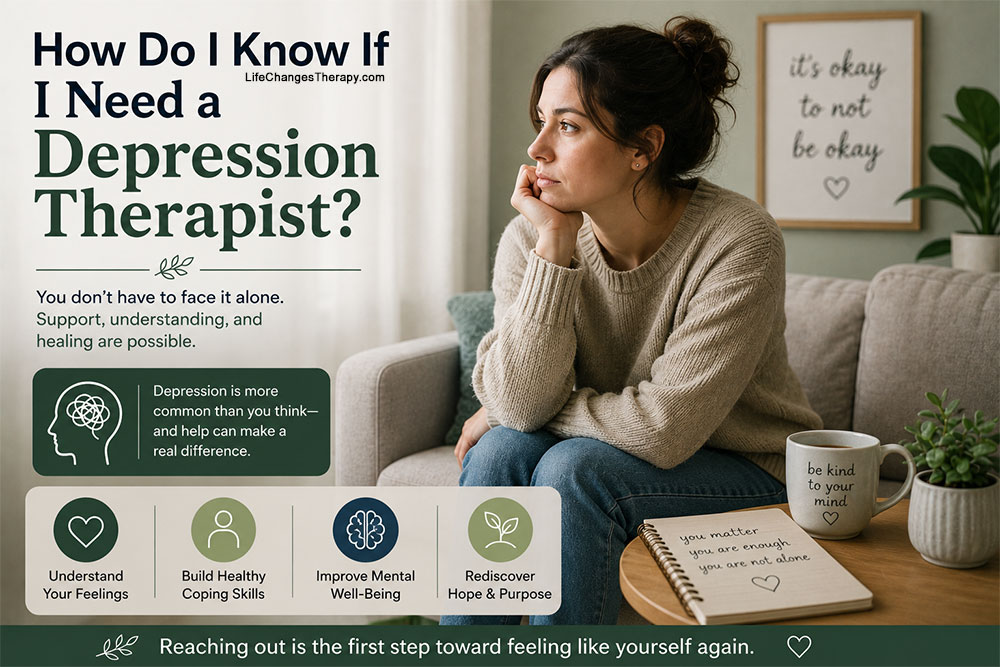
Many people struggle with low moods, stress, exhaustion, or difficult life circumstances and wonder whether what they’re experiencing is normal or if professional support might help. One of the most common questions people ask is: “How do I know if I need a depression therapist?”
The reality is that depression does not always look like extreme sadness. It can show up as fatigue, irritability, loss of motivation, emotional numbness, difficulty concentrating, or a loss of interest in activities that once brought joy.
If you have been questioning whether it is time to seek support, understanding the signs of depression can help you make an informed decision.
Quick Answer
You may benefit from working with a depression therapist if persistent feelings of sadness, hopelessness, low motivation, emotional numbness, fatigue, or loss of interest are affecting your daily life, relationships, work, or overall well-being.
Seeking support early often makes recovery easier and can prevent symptoms from becoming more severe.
What Does Depression Actually Feel Like?
Depression affects everyone differently.
While some people experience deep sadness, others may notice more subtle changes in their thoughts, emotions, energy levels, or behaviour.
Common symptoms include:
✓ Persistent sadness
✓ Loss of interest in hobbies or activities
✓ Low energy or fatigue
✓ Difficulty concentrating
✓ Changes in appetite
✓ Changes in sleep patterns
✓ Feelings of worthlessness
✓ Increased irritability
✓ Social withdrawal
✓ Lack of motivation
Many people are surprised to learn that depression can sometimes feel more like emotional numbness than sadness.
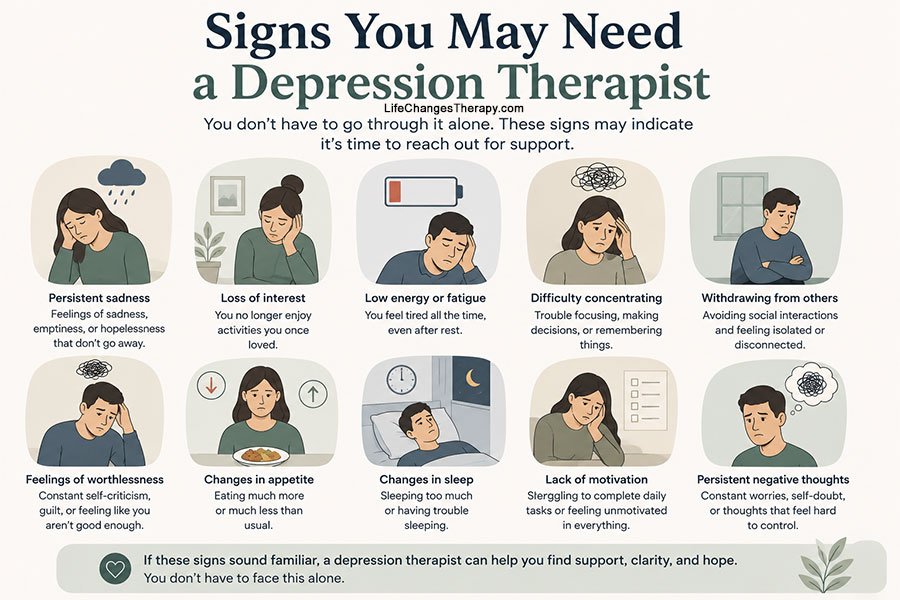
Signs You May Need a Depression Therapist
Your Symptoms Last More Than Two Weeks
Everyone experiences difficult days.
However, when symptoms continue for several weeks or longer, it may indicate something more significant.
If low mood, fatigue, or hopelessness have become persistent, a depression therapist can help assess what may be contributing to those feelings.
You No Longer Enjoy Things You Once Loved
One of the most common signs of depression is losing interest in activities that previously brought enjoyment.
This may include:
- Hobbies
- Social activities
- Exercise
- Family gatherings
- Personal goals
When enjoyment consistently disappears, it is often worth exploring professional support.
Your Work or Daily Responsibilities Are Suffering
Depression often affects productivity and concentration.
You may notice:
✗ Difficulty focusing
✗ Reduced motivation
✗ Increased procrastination
✗ Struggling to complete routine tasks
✗ Feeling mentally exhausted throughout the day
These symptoms can gradually impact career performance and daily functioning.
You Feel Emotionally Disconnected
Many individuals describe depression as feeling disconnected from themselves, others, or life in general.
You may feel:
✓ Emotionally numb
✓ Detached from relationships
✓ Less connected to family and friends
✓ Unable to experience joy or excitement
A depression therapist can help identify the underlying causes and support emotional reconnection.
You Are Withdrawing from Others
Social isolation often becomes both a symptom and a contributor to depression.
You may find yourself:
✗ Avoiding social events
✗ Ignoring messages or calls
✗ Spending more time alone
✗ Feeling disconnected even when around others
While solitude can be healthy, ongoing withdrawal may indicate a need for support.
Depression vs Normal Stress
Many people wonder whether they are experiencing depression or simply stress.
While there can be overlap, there are important differences.
| Stress | Depression |
| Usually tied to specific situations | May occur with or without clear triggers |
| Often improves when stressors decrease | Symptoms may persist regardless of circumstances |
| Temporary emotional strain | Longer-lasting emotional changes |
| Energy often returns after rest | Fatigue often continues despite rest |
If symptoms continue even after life circumstances improve, working with a depression therapist may be beneficial.
Common Myths About Depression Therapy
Many people delay treatment because of misconceptions about therapy.
Myth #1: I Should Be Able To Handle This Myself
✗ Depression is not a sign of weakness.
Seeking support is often a sign of self-awareness and strength.
Myth #2: Therapy Is Only For Severe Depression
✗ Therapy can help individuals experiencing mild, moderate, or severe symptoms.
Early support often leads to better outcomes.
Myth #3: Talking About It Will Make It Worse
✗ Many people find that discussing their experiences reduces emotional burden and provides clarity.
Myth #4: Depression Will Go Away On Its Own
✗ While symptoms sometimes improve naturally, untreated depression can persist or worsen over time.
What Does a Depression Therapist Do?
A depression therapist provides a safe, supportive, and non-judgmental space to explore emotions, thoughts, behaviours, and life circumstances.
Therapy may focus on:
✓ Understanding contributing factors
✓ Challenging negative thought patterns
✓ Improving emotional regulation
✓ Building healthy coping skills
✓ Reconnecting with personal goals
✓ Restoring self-confidence
✓ Developing healthier routines
Therapy is tailored to the unique needs of each individual.
Benefits of Depression Therapy
Many people notice meaningful improvements through therapy.
Common benefits include:
✓ Improved mood
✓ Increased motivation
✓ Better stress management
✓ Healthier relationships
✓ Greater self-awareness
✓ Improved sleep
✓ More balanced thinking
✓ Stronger emotional resilience
The goal is not simply symptom reduction but creating lasting emotional well-being.
When Should You Seek Help Immediately?
While many people experience mild to moderate symptoms, some situations require immediate professional support.
Seek help right away if you experience:
✗ Thoughts of self-harm
✗ Thoughts of suicide
✗ Severe hopelessness
✗ Inability to function in daily life
✗ Extreme emotional distress
Immediate support is available through crisis services, healthcare professionals, and emergency resources.
Why Choose Life Changes Therapy?
Life Changes Therapy provides professional depression therapy for individuals struggling with low mood, emotional overwhelm, stress, anxiety, and life transitions.
Clients appreciate their:
✓ Compassionate approach
✓ Individualized treatment plans
✓ Supportive environment
✓ Practical coping strategies
✓ Focus on long-term wellness
Sonia Panchyshyn M.S.W., B.S.W., R.S.W. works closely with clients to help them better understand their emotional experiences, develop healthier coping tools, and move toward greater emotional balance and resilience.
Final Thoughts
How do you know if you need a depression therapist in Mississauga?
If ongoing sadness, emotional numbness, low motivation, fatigue, or withdrawal are affecting your quality of life, it may be time to seek support.
Depression is highly treatable, and therapy can provide the tools, guidance, and support needed to move forward with greater clarity, confidence, and hope.
Seeking help is not a sign of weakness.
It is often the first step toward feeling like yourself again.
FAQ
How do I know if I need a depression therapist?
You may benefit from therapy if symptoms such as sadness, fatigue, emotional numbness, hopelessness, or loss of interest are affecting your daily life.
Can depression therapy help even if my symptoms are mild?
Yes. Many people seek therapy early to prevent symptoms from becoming more severe and to develop healthy coping strategies.
How long does depression therapy take?
The length of therapy varies depending on individual goals, symptom severity, and life circumstances.
What if I’m not sure I have depression?
A qualified therapist can help assess your symptoms and determine whether depression or another concern may be contributing to how you’re feeling.
Does Life Changes Therapy provide depression therapy?
Yes. Life Changes Therapy offers professional depression therapy services designed to help individuals improve emotional well-being, develop coping skills, and build resilience.