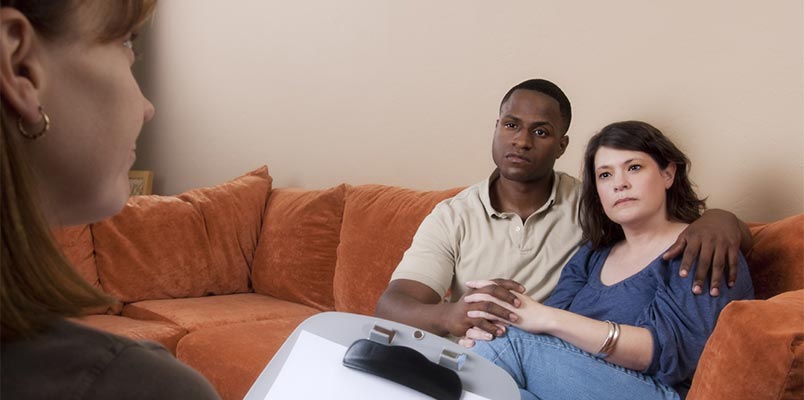
Marriage and counseling therapy helps individuals with one of the most meaningful relationships in a person’s life, but even strong relationships can experience periods of conflict, emotional distance, stress, or uncertainty.
Marriage and counseling therapy provides couples with a structured, supportive environment to understand what is happening in their relationship, improve communication, address recurring problems, and work toward healthier patterns together.
Couples do not need to wait until their marriage is in crisis to seek help. Marriage counseling can be useful when partners are struggling with repeated arguments, trust concerns, intimacy changes, parenting disagreements, major life transitions, or simply feel less connected than they once did.
For couples looking for marriage counseling in Mississauga, professional support can provide an opportunity to slow down difficult conversations, understand each partner’s perspective, and develop practical strategies for moving forward.
Marriage and Counseling: Quick Answer
Marriage and counseling therapy helps couples identify relationship patterns, communicate more effectively, work through conflict, rebuild emotional connection, and make informed decisions about the future of their relationship.
A therapist does not decide who is right or wrong. Instead, therapy creates a more constructive environment where both partners can express concerns, understand underlying issues, and learn healthier ways of responding to each other.
| Relationship Concern | How Marriage Counseling May Help |
|---|---|
| Communication problems | Develop clearer, more respectful communication |
| Recurring arguments | Identify patterns and improve conflict resolution |
| Emotional distance | Rebuild connection and emotional intimacy |
| Trust concerns | Address hurt and establish healthier boundaries |
| Infidelity | Process betrayal and explore whether trust can be rebuilt |
| Parenting disagreements | Improve teamwork and clarify expectations |
| Major life changes | Navigate transitions together |
| Intimacy concerns | Discuss emotional and physical connection safely |
What Is Marriage and Counseling Therapy?
Marriage and counseling therapy is a form of relationship-focused counselling that helps partners explore the concerns affecting their marriage.
Sessions may focus on what is happening now, but the therapist may also explore earlier experiences or patterns that influence how each person responds to conflict, closeness, stress, or vulnerability.
Marriage counseling may address:
✓ Communication difficulties
✓ Frequent arguments
✓ Emotional disconnection
✓ Trust problems
✓ Infidelity or betrayal
✓ Intimacy concerns
✓ Parenting disagreements
✓ Financial stress
✓ Different expectations for the relationship
✓ Major transitions such as moving, career changes, illness, or retirement
✓ Separation considerations
✓ Resentment that has developed over time
Some couples begin therapy because of one specific issue. Others recognize that several smaller problems have gradually created distance between them.
If you are unsure whether counselling would be appropriate for your situation, our guide on marriage counseling and whether it is right for your relationship explores several common reasons couples seek professional support.
What Does Marriage Counseling Actually Help With?
Marriage counseling can help couples understand the patterns behind their conflicts and develop healthier ways of communicating, solving problems, and maintaining emotional connection.
This is one of the most common questions couples ask when they are considering therapy.
The purpose is not simply to stop arguments. Effective marriage and counseling therapy often looks beneath the disagreement itself.
For example, an argument about household responsibilities may actually involve feelings of being unappreciated. A disagreement about money may reflect differences in security, independence, or long-term priorities. Conflict about time together may be connected to loneliness or emotional disconnection.
Understanding the issue beneath the issue can help partners respond differently.
Signs Marriage Counseling May Be Helpful
Every marriage experiences disagreement. The presence of conflict alone does not necessarily mean a relationship is unhealthy.
Counselling may become particularly helpful when the same problems continue without resolution.
Common signs include:
✓ You have the same arguments repeatedly
✓ Conversations quickly become defensive or hostile
✓ One or both partners withdraw during conflict
✓ You feel emotionally disconnected
✓ Affection or intimacy has significantly changed
✓ Trust has been damaged
✓ Resentment continues to build
✓ You struggle to discuss important topics calmly
✓ Parenting disagreements are affecting the relationship
✓ One or both partners are questioning the future of the marriage
Sometimes the warning sign is not frequent arguing at all. Some couples stop discussing difficult issues because conflict feels exhausting or pointless.
Emotional withdrawal can create just as much distance as ongoing conflict.
You can also review the signs that you may need marriage counselling for additional examples of when professional support may be useful.
How Marriage and Counseling Therapy Improves Communication
Communication problems are among the most common reasons couples seek marriage counseling.
Partners may genuinely want to understand one another but become trapped in patterns such as:
- Interrupting
- Becoming defensive
- Criticizing
- Blaming
- Raising voices
- Shutting down
- Avoiding important topics
- Assuming what the other person means
- Bringing previous arguments into current disagreements
Marriage therapy can slow down these interactions.
Instead of focusing only on winning an argument, couples can learn how to communicate what they need and listen to what their partner is actually saying.
The American Psychological Association’s guidance on healthy relationships also emphasizes open communication and constructive ways of handling disagreements.
When Should a Couple Consider Marriage Counseling?
A couple should consider marriage counseling when relationship problems are becoming difficult to resolve independently, when emotional connection is declining, or when both partners want to strengthen the relationship before larger problems develop.
You do not need to wait for a major crisis.
In fact, seeking marriage and counseling support earlier may make it easier to discuss concerns before resentment and unhealthy interaction patterns become deeply established.
Couples often seek help during:
- Engagement or early marriage
- Pregnancy or the transition to parenthood
- Parenting challenges
- Career changes
- Financial stress
- Moving or relocation
- Caring for aging parents
- Health problems
- Blended-family transitions
- Children leaving home
- Retirement
- Periods of grief or loss
Marriage counseling can therefore be both preventive and restorative.
Marriage Counseling for Communication Problems
Couples sometimes describe their problem by saying, “We just can’t communicate anymore.”
Usually, communication has not disappeared completely. Instead, certain conversations have become emotionally charged.
One partner may pursue the conversation while the other withdraws. One may become more critical while the other becomes increasingly defensive.
Over time, these patterns can become automatic.
Marriage counseling can help couples recognize the cycle instead of seeing the other person as the entire problem.
This shift can be important because it changes the question from:
“Who is causing this?”
to:
“What happens between us when this problem appears?”
That creates more room for cooperation and change.
Marriage Counseling After Infidelity
Infidelity can create significant emotional pain and uncertainty.
The hurt partner may experience anger, sadness, intrusive thoughts, loss of trust, or difficulty understanding what happened.
The unfaithful partner may experience guilt, shame, fear, or uncertainty about how to repair the damage.
Marriage therapy can provide a structured place to discuss the betrayal and determine what both partners need moving forward.
This may include:
✓ Ending outside relationships
✓ Establishing clearer boundaries
✓ Increasing honesty and transparency
✓ Processing the emotional impact
✓ Understanding relationship vulnerabilities without excusing the betrayal
✓ Deciding whether reconciliation is desired
✓ Gradually rebuilding trust
Our article on marriage counselling for infidelity and rebuilding trust explains this recovery process in greater detail.
Marriage and Counseling for Emotional Distance
Not all troubled marriages involve dramatic conflict.
Sometimes couples simply become distant.
Work, parenting, responsibilities, health concerns, and daily routines can gradually leave less time for emotional connection.
Signs of emotional distance may include:
- Conversations becoming mostly logistical
- Spending less meaningful time together
- Reduced affection
- Feeling lonely despite being married
- Sharing personal concerns with others instead of your spouse
- Avoiding difficult conversations
- Feeling more like roommates than partners
Marriage counseling can help couples understand how this distance developed and identify realistic ways to reconnect.
What Happens During Marriage Counseling?
The first sessions generally focus on understanding the relationship and identifying the concerns that brought the couple to therapy.
A therapist may ask about:
- The history of the relationship
- Current challenges
- Communication patterns
- Significant life events
- Previous attempts to resolve the problem
- Individual concerns
- Relationship strengths
- Goals for therapy
From there, sessions become more focused on the specific patterns or concerns affecting the relationship.
Depending on the couple, therapy may involve communication exercises, problem-solving strategies, emotional exploration, boundary discussions, or structured conversations around particularly difficult subjects.
What Marriage Counseling Is — and Is Not
| Marriage Counseling Is | Marriage Counseling Is Not |
|---|---|
| A structured place for honest discussion | A courtroom for deciding who is right |
| Focused on relationship patterns | An opportunity to blame one partner |
| Designed to improve understanding | A guarantee that every marriage will continue |
| Collaborative | A process where the therapist makes decisions for you |
| Tailored to the couple | The same approach for every relationship |
| Focused on meaningful change | Simply repeating arguments in front of a therapist |
One of the goals of marriage and counseling therapy is to create conversations that couples may struggle to have effectively on their own.
Can Marriage Counseling Save Every Marriage?
Marriage counseling can help many couples improve their relationship, but therapy cannot guarantee a particular outcome.
Progress depends on factors such as:
✓ Willingness to participate
✓ Honesty during the process
✓ Motivation to make changes
✓ Respect for boundaries
✓ Consistency between sessions
✓ The nature and severity of the relationship problems
Sometimes therapy helps partners rebuild the marriage.
In other situations, therapy helps people understand that separation may be the healthiest decision.
The purpose is not to force reconciliation. It is to help partners understand their situation more clearly and make thoughtful decisions about what comes next.
Marriage Counseling Mississauga: Choosing a Therapist
When looking for marriage counseling in Mississauga, consider whether the therapist has experience working with couples and the particular concerns affecting your relationship.
You may want to ask:
- Does the therapist regularly work with couples?
- What kinds of relationship concerns do they address?
- What should we expect during the first session?
- How often are sessions typically scheduled?
- Are virtual appointments available?
- How are goals established?
- How does the therapist handle significant conflict during a session?
It is also important that both partners feel able to speak openly.
A strong therapeutic relationship can help create the safety necessary for difficult conversations.
Benefits of Marriage and Counseling Therapy
The specific benefits of counselling vary from couple to couple, but therapy may help partners:
✓ Communicate more clearly
✓ Understand each other’s emotional needs
✓ Reduce destructive conflict patterns
✓ Strengthen emotional intimacy
✓ Establish healthier boundaries
✓ Address trust concerns
✓ Improve problem-solving
✓ Navigate major life changes
✓ Resolve longstanding resentment
✓ Develop realistic expectations
✓ Make informed relationship decisions
Progress often happens gradually.
The goal is not necessarily to create a relationship without disagreements. Healthy couples can disagree.
The goal is to develop healthier ways of responding when differences occur.
When Marriage Counseling May Require Additional Support
Some relationship situations require additional considerations.
Where there is ongoing abuse, threats, coercive control, or concerns about physical safety, standard couples counselling may not be appropriate as the first intervention.
Individual support and safety planning may be more appropriate depending on the circumstances.
Likewise, concerns involving significant mental health symptoms, substance use, or other personal challenges may require individual treatment alongside relationship work.
A therapist can help determine which type of support is appropriate.
Marriage Counseling in Mississauga with Life Changes Therapy
Life Changes Therapy provides marriage counseling in Mississauga for couples experiencing communication problems, recurring conflict, trust concerns, emotional distance, infidelity, parenting disagreements, and other relationship challenges.
Therapy provides a private, supportive setting where both partners can discuss their concerns and work toward greater understanding.
Whether your marriage is currently struggling or you simply want to strengthen your connection, marriage and counseling therapy can provide practical tools and professional guidance for moving forward.
Conclusion: Is Marriage and Counseling Right for Your Relationship?
Marriage and counseling therapy can help couples understand relationship problems, communicate more effectively, rebuild connection, and work through difficult decisions together.
You do not need to wait until your relationship reaches a breaking point.
Marriage counseling may be useful when the same conflicts continue, trust has been damaged, emotional distance is growing, or you simply recognize that your relationship could benefit from professional support.
For couples seeking marriage counseling in Mississauga, Life Changes Therapy offers a supportive environment for discussing concerns, identifying patterns, and building healthier ways of relating to one another.
Contact Life Changes Therapy to learn more about marriage counseling in Mississauga and take the next step toward a stronger, healthier relationship.
Frequently Asked Questions About Marriage and Counseling
Is marriage counseling only for couples considering divorce?
No. Many couples use marriage counseling before problems become severe. Counselling can help improve communication, strengthen connection, prepare for major transitions, and prevent smaller concerns from becoming larger conflicts.
What happens in the first marriage counseling session?
The first session generally focuses on understanding the relationship, current concerns, each partner’s perspective, and what the couple hopes to accomplish. The therapist may also discuss communication patterns and recommend areas to focus on during future sessions.
How long does marriage counseling take?
There is no single timeline. Some couples begin noticing useful changes within several sessions, while more complex concerns may require longer-term support. The length of therapy depends on the issues involved, the couple’s goals, and their participation in the process.
Can we attend marriage counseling if only one person thinks there is a problem?
Yes. Couples often enter therapy with different perspectives about the seriousness of the problem. Counselling can provide a structured setting where both partners can explain their experiences and identify what they would like to improve.
Can marriage counseling help after years of relationship problems?
It can. Longstanding patterns may take more time to change, but couples can still learn new ways of communicating and responding to one another. Progress depends on the circumstances of the relationship and each partner’s willingness to participate in the process.